01
Why ducts are the worst affected area
A duct is sheltered from wind and rain, rarely disturbed and almost never cleaned. Pigeons nest there in preference to open balconies, and material builds up over years.
Residents on lower floors get the consequences: droppings on the kitchen window, smell, insects and occasionally blocked duct drainage.
02
How duct netting is installed
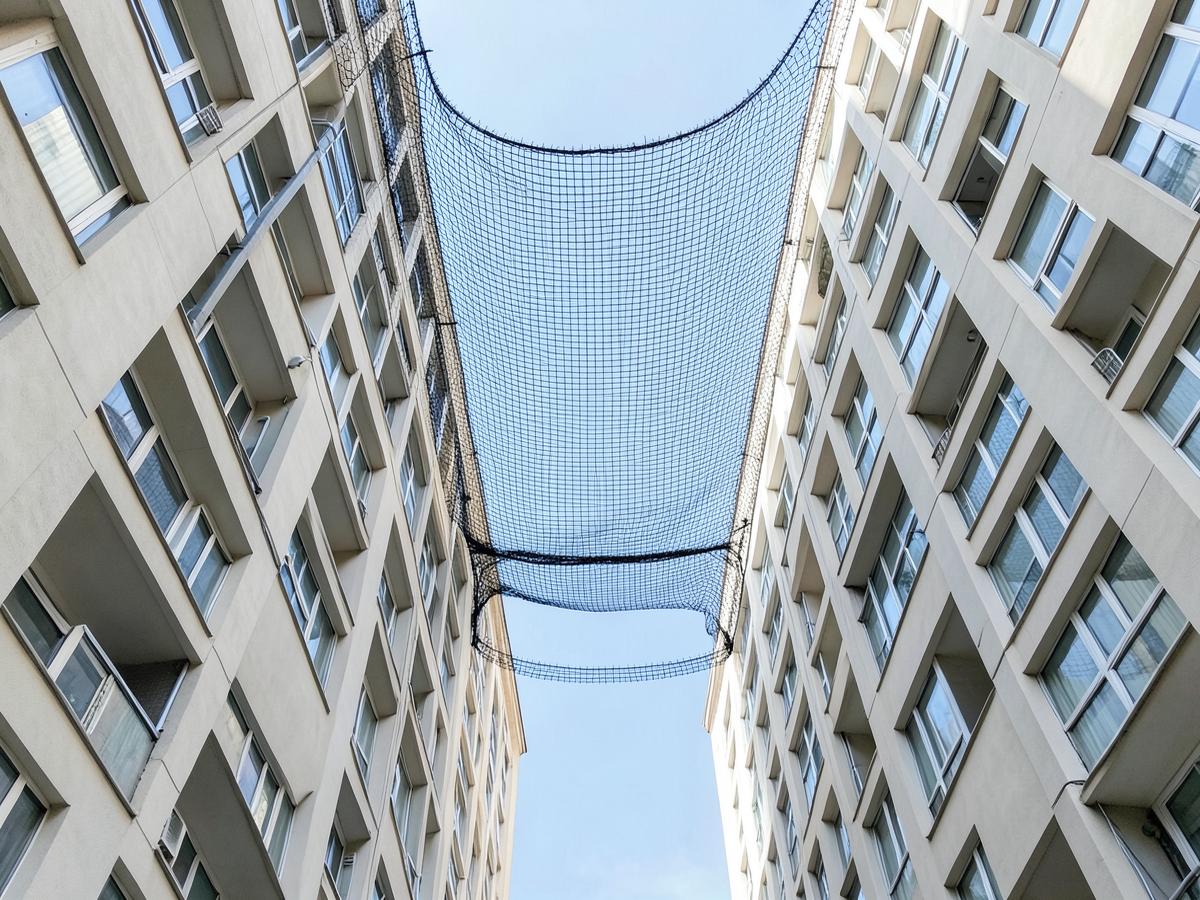
- The shaft opening is measured at roof level and anchor points are set into the parapet or slab on all sides.
- A stainless steel wire grid is run across the opening for larger shafts so the net is supported over its full span.
- The net is laced to the wire with no slack, since a sagging duct net collects debris and eventually tears.
- Existing nesting material inside the shaft is cleared before closing the top, otherwise birds are trapped and the debris stays.
03
Coordination with the society
A duct is common property, so this work is normally commissioned by the managing committee rather than an individual flat. We are happy to survey the shafts, mark the affected areas and provide a written scope the committee can circulate.
Where several shafts are involved, the work can be phased across floors or wings to spread the cost.