The cost of birds inside an industrial building
- Contaminated stock, packaging and finished goods.
- Failed hygiene and food-safety audits in FMCG, pharma and food premises.
- Droppings on machinery, conveyors and electrical panels.
- Nesting material in roof structures and light fittings.
- Recurring cleaning cost and staff time diverted to it.
How we approach a large site
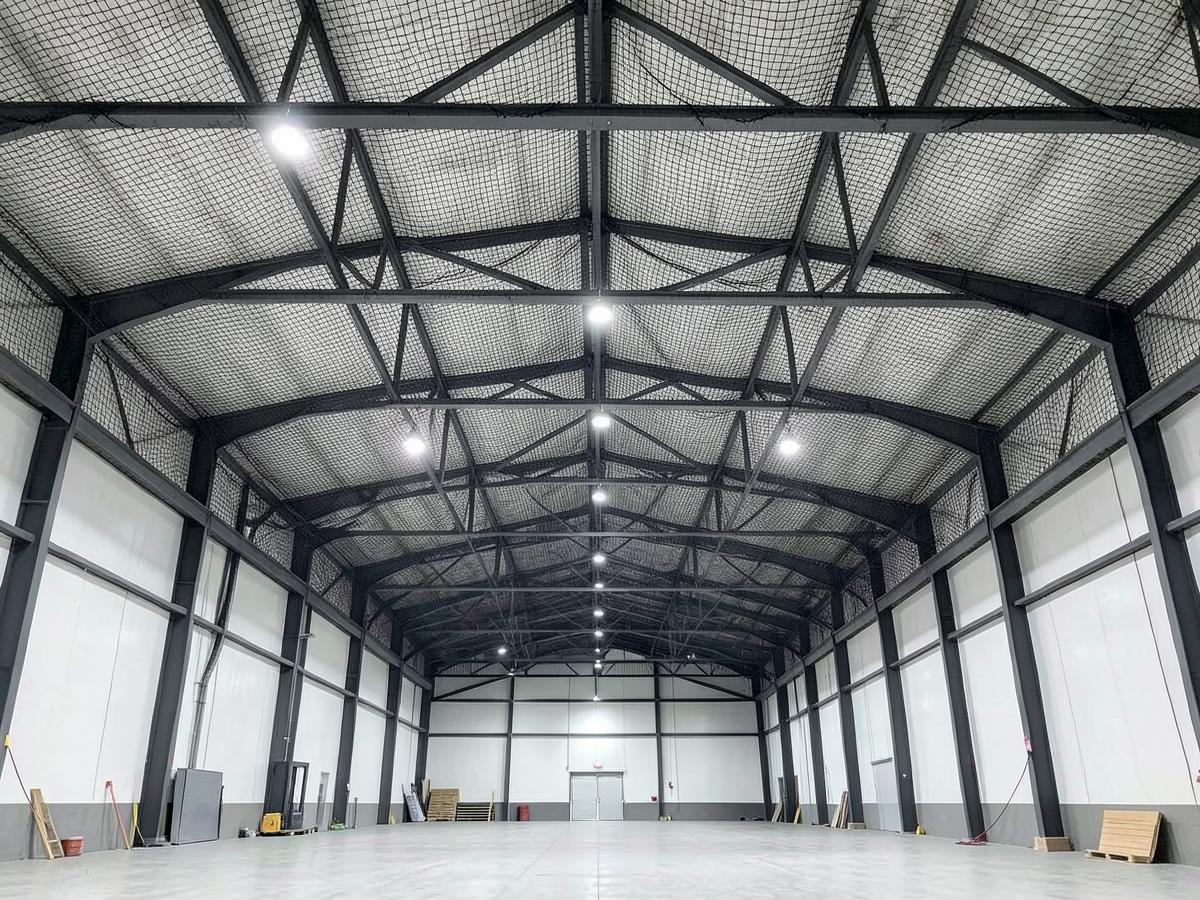
Industrial work starts with a survey: where birds enter, where they roost, and which spans actually need to be closed. Netting the entire roof is rarely necessary or economical.
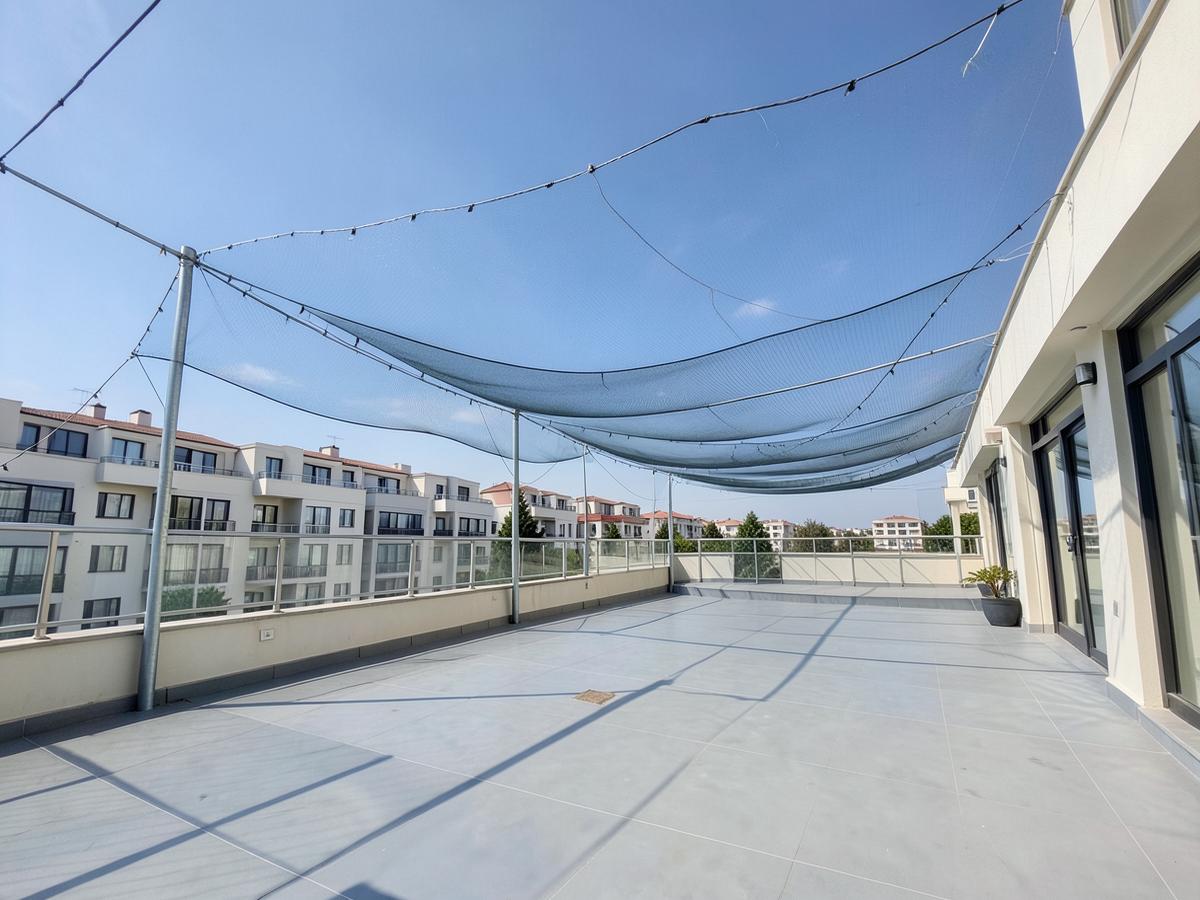
Fixing details are worked out against the steelwork — purlins, trusses and columns — using clamps rather than drilling wherever the structure allows. Net panels are sized so a single section can be dropped for maintenance without taking down the whole run.
Work is scheduled around production, including night or weekend windows and shutdown periods where required.
Materials for industrial exposure
We use heavier HDPE nets with a UV stabiliser for these applications, with galvanised or stainless wire and clamps chosen for the internal environment. Where the building is humid or chemically aggressive, the fitting grade is upgraded accordingly.
Typical properties we cover
- Warehouses and distribution centres.
- Manufacturing sheds and assembly halls.
- Cold storage entries and dispatch bays.
- Malls, showrooms and hotel atria.
- Hospitals, kitchens and food-processing premises.